An independent Halloween almanac: the history, the folklore and the making of October
The history, the folklore and the making of October
A Halloween Almanac
Four strands
One holiday, read from four angles
Each strand opens with an index of its guides: the origins, the vintage imagery, the making, and the evening itself.
- 01
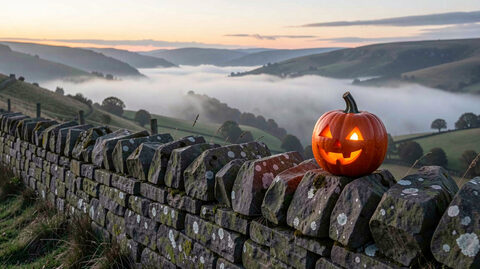
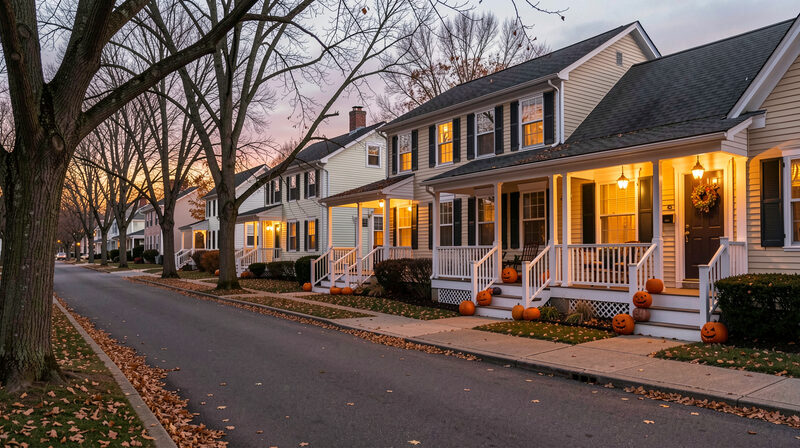
Origins and Folklore
Where the night came from: the Gaelic festival of Samhain, the Christian feast behind the name, the lantern and the doorstep.
- 02
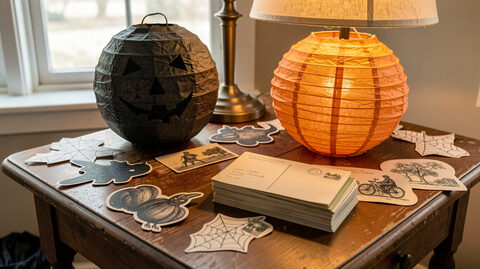
Vintage Halloween
The old Halloween in print: postcards, paper die cuts and lanterns, the makers behind them and the collectors who keep them.
- 03
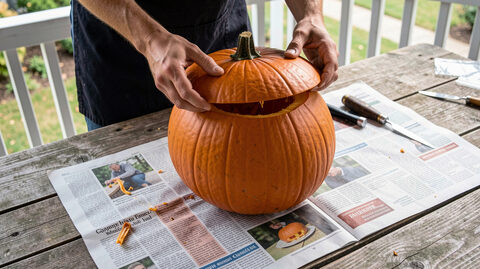
Decorating and Carving
The practical half: choosing and carving a pumpkin that holds, lighting a porch safely and building a display from what is there.
- 04
Celebrating and Safety
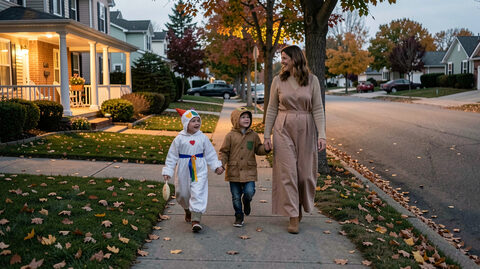
The evening itself: a safe trick or treat, the foods and objects that harm pets, and costumes decade by decade.
Strand 01 of 04
Origins and Folklore
Where the night came from: the Gaelic festival of Samhain, the Christian feast behind the name, the lantern and the doorstep.
Origins and Folklore
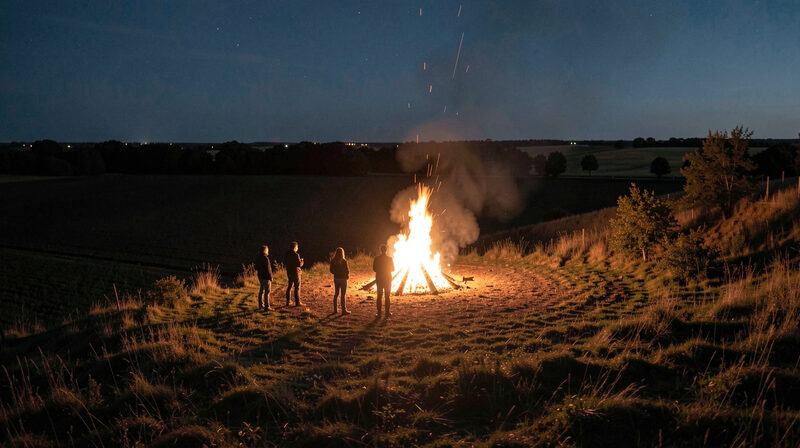
From Samhain to Halloween
The long road from the Gaelic festival of Samhain to the modern night of October 31, separating the documented history from later invention.
A Gaelic quarter day and a Christian vigil, layered into one night.
Origins and Folklore
How Trick or Treat Began
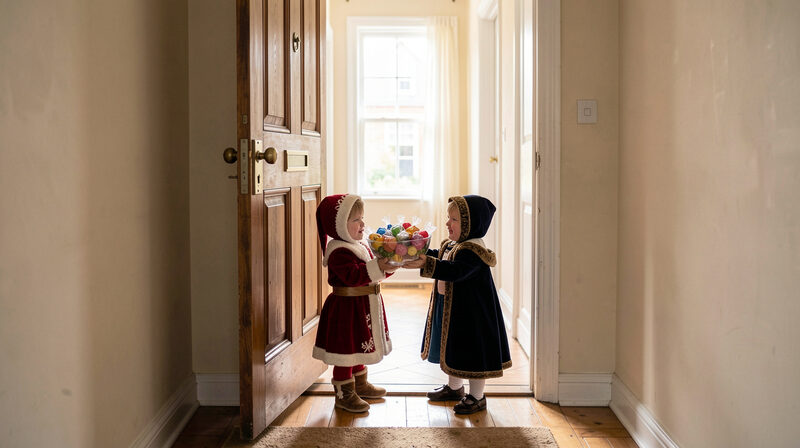
Guising, souling and the American porch light: how asking for sweets on October 31 became a routine across the English speaking world.
From souling and guising to the porch light and the paper bag.
Strand 02 of 04
Vintage Halloween
The old Halloween in print: postcards, paper die cuts and lanterns, the makers behind them and the collectors who keep them.
Vintage Halloween
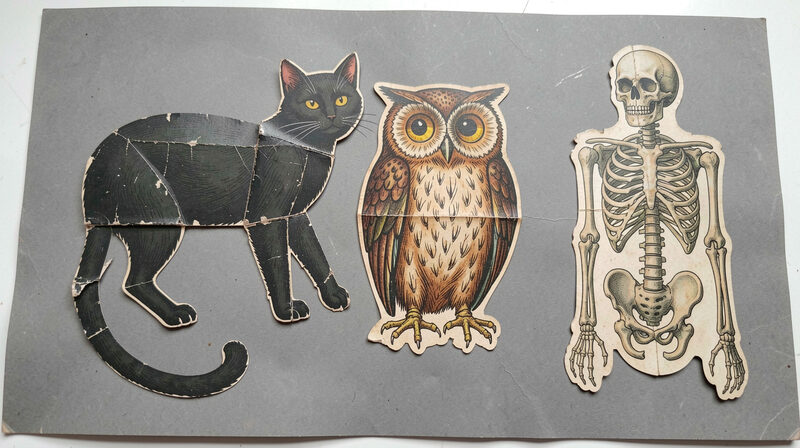
Vintage Halloween Postcards
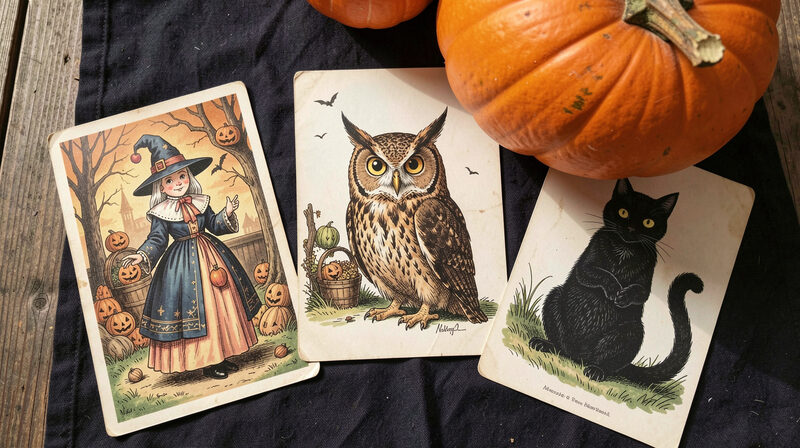
The golden age of Halloween postcards, the publishers behind it and the symbols, from owls and cats to turnips, that fill the old cards.
Witches, owls and cats, printed by the million and kept in albums.
Vintage Halloween
Collecting Vintage Halloween Decorations
How paper die cuts, lanterns and noisemakers were made, how to judge their age and how collectors store fragile Halloween pieces.
How die cuts were made, dated and stored without destroying them.
From the archive
Guides that keep the older questions
This domain published an English language Halloween resource site for many years: wallpapers, vintage pictures, clipart, costumes, masks and a small dictionary. These guides answer the questions those pages answered, at the same addresses.
Restored guide
From Samhain to Halloween
A Gaelic quarter day and a Christian vigil, layered into one night.
Restored guide
How Trick or Treat Began
From souling and guising to the porch light and the paper bag.
Restored guide
Vintage Halloween Postcards
Witches, owls and cats, printed by the million and kept in albums.
Restored guide
How to Carve a Pumpkin That Lasts
Choose a sound fruit, cut a notched lid, thin the wall, slow the rot.
Restored guide
The Jack o Lantern
Why the lantern began as a turnip and ended as a pumpkin.
Restored guide
Trick or Treat Safety
Visibility, routes, costume checks, the sweets rule and the animals.
Strand 03 of 04
Decorating and Carving
The practical half: choosing and carving a pumpkin that holds, lighting a porch safely and building a display from what is there.
Decorating and Carving
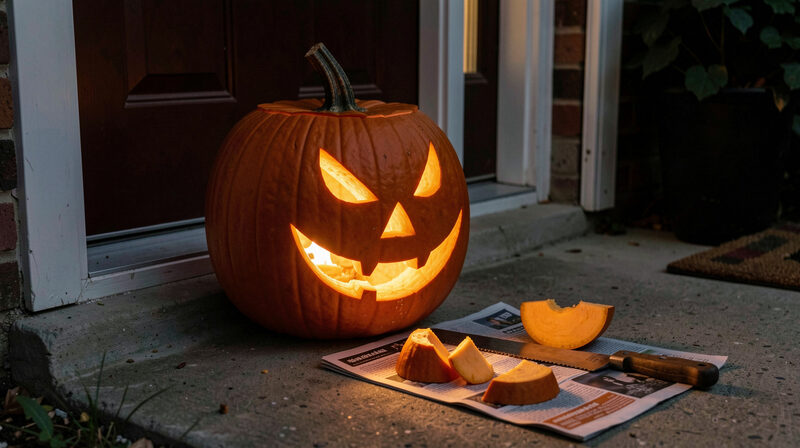
How to Carve a Pumpkin That Lasts
Choose the right pumpkin, cut a sound lid, carve a clean pattern and slow the rot with simple steps that keep a jack o lantern firm.
Choose a sound fruit, cut a notched lid, thin the wall, slow the rot.
Decorating and Carving
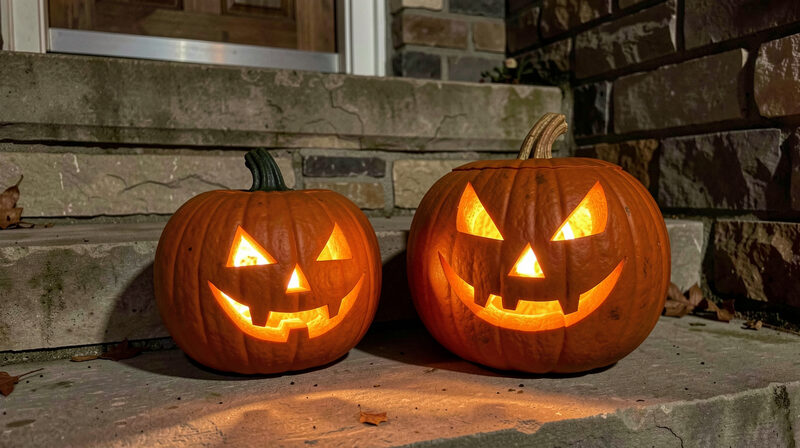
The Jack o Lantern
Why the lantern began as a carved turnip in Ireland and Scotland, who carried the custom to America and how the pumpkin took its place.
Why the lantern began as a turnip and ended as a pumpkin.
The reading room
Other independent sources worth a bookmark
The Hollow Lantern sells nothing and answers to no organisation. These independent archives and heritage bodies hold material this magazine draws on: the British roots of the night, the objects in public collections, and the practical safety guidance for the evening.
English Heritage
A heritage body explains the British roots of the night, from bonfires and souling to the modern doorstep.
Museum of London
A city museum traces Halloween customs through London, with objects and archives from the collections.
National Trust
The traditions of the season in Britain, from apple games and divination to the folklore of the dark half of the year.
NYPL Digital Collections
A large public archive of printed ephemera and commercial illustration, including seasonal cards and trade catalogues.
History: Halloween
A general reference hub gathering the main threads of the holiday, from its origins to its modern customs.
Safe Kids Worldwide
The practical safety guidance for the evening, covering visibility, costume fit, routes and treats.
Strand 04 of 04
Celebrating and Safety
The evening itself: a safe trick or treat, the foods and objects that harm pets, and costumes decade by decade.
Celebrating and Safety
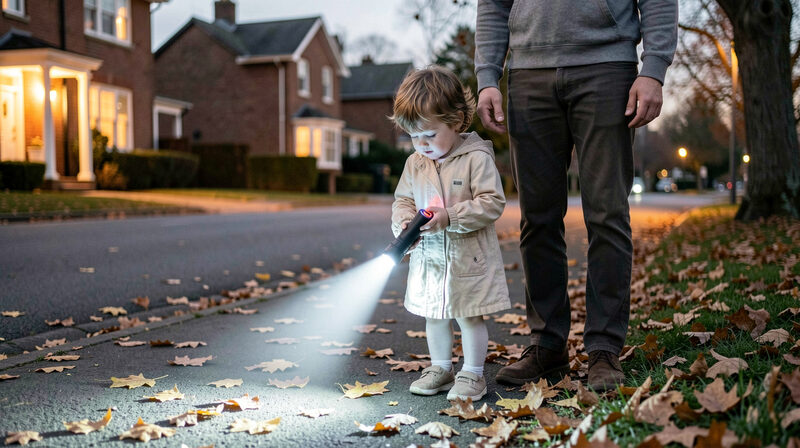
Trick or Treat Safety
Visibility, routes, costume checks and the sweets rule: a plain plan for the evening, plus the Halloween foods and objects that harm pets.
Visibility, routes, costume checks, the sweets rule and the animals.
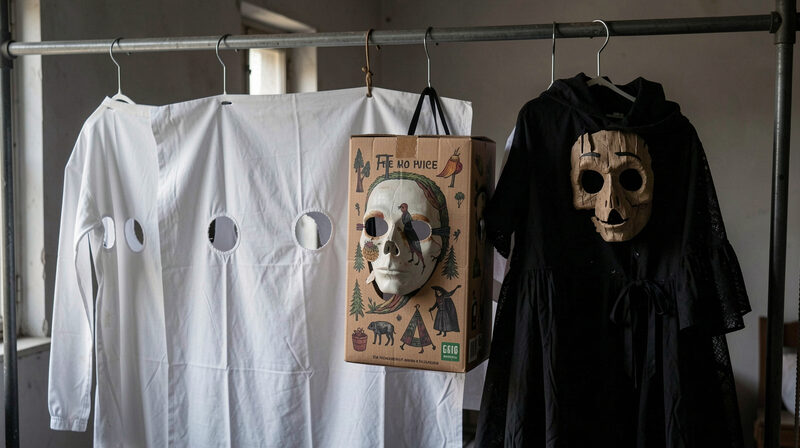
Celebrating and Safety
Halloween Costumes Through the Decades
From homemade sheet ghosts to mass market masks: how Halloween dressing changed decade by decade and what each era still lends us.
The sheet ghost, the boxed mask and the revival of the homemade.
The lantern in pictures
Five views from the guides
Five photographs from the guides below, each with the page that explains the scene in full.
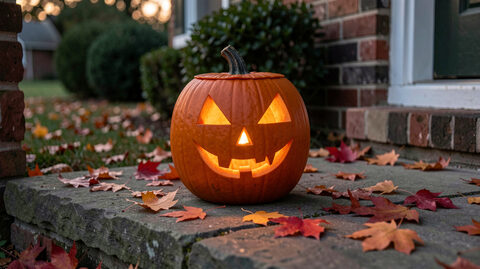
The lantern, lit and left
A carved fruit on a sheltered step is the oldest object of the night; the carving guide keeps it firm for a week.
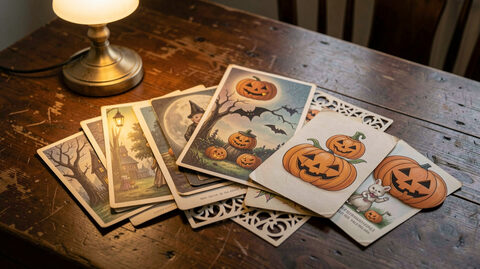
The night on paper
Before the costume there was the card: witches, owls and black cats printed for a penny and kept in albums.
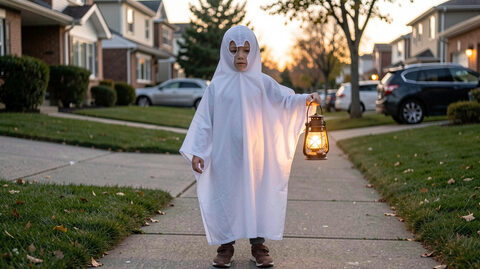
The sheet and the box
A homemade ghost still stands beside the boxed mask; the costume page follows a century of both.
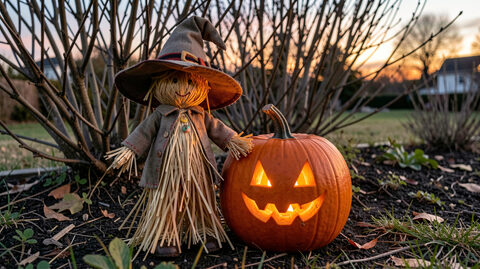
A display from what is there
One figure, one lantern and a clear path beat a crowded front garden; the making section shows the order of work.
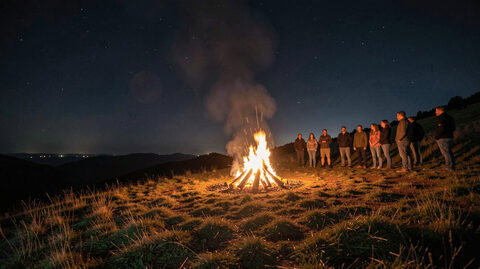
Fire on the hill
The bonfire belongs to the older night; the origins page separates what is documented from what was invented later.