Celebrating and Safety
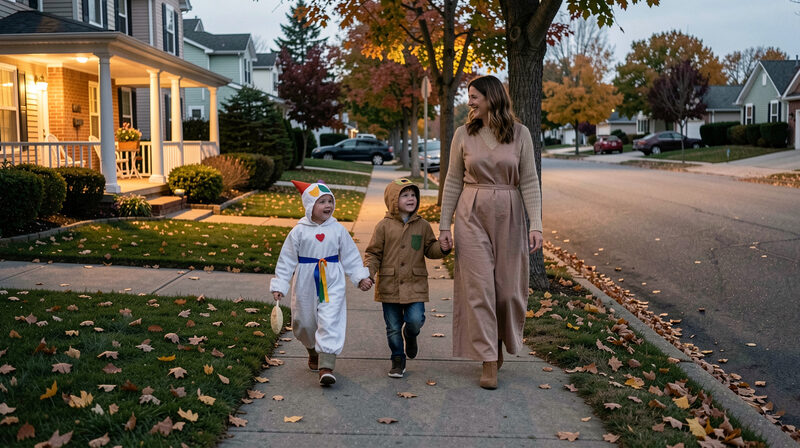
The evening itself is the point of all the rest. A costume, a route, a lit porch and a bag of sweets: done well, Halloween is one of the easiest nights of the year to get right, and done carelessly it is one of the easiest to get wrong. This section deals with the night as a family actually lives it, and with the small rules that keep it safe for children, for pets and for the people who answer the door.
What this section covers
Two pages make up the strand. Trick or treat safety sets out a plain plan for the evening: visibility, route, costume fit, the sweets rule and the Halloween foods and objects that harm animals. Halloween costumes through the decades looks at what people have worn since the early twentieth century, from homemade sheet ghosts to boxed masks and printed outfits, and at what each era still lends a modern costume.
The plain rules
Most Halloween safety advice can be reduced to a short list. Be seen: light colours, reflective tape and a torch. Be reachable: a known route, an adult within sight of younger children and a phone that is charged. Be able to move: a costume that fits, shoes that can be walked in and a mask that can be lifted or replaced by face paint. Be careful at the door: stand back, never enter a stranger's house and let an adult check the bag at home. Be kind to animals: keep pets inside, away from the door and away from sweets.
None of this is complicated, and none of it needs to spoil the night. The pages here give the reasons behind each rule so that a parent can judge the situation rather than memorise a list.
Sweets, allergies and the teal pumpkin
Food allergy is the one part of the evening that catches families out. A small number of sweets contain nuts, milk or other common allergens, and a child with an allergy cannot simply pick around them. Many households now offer a non food alternative, and the teal pumpkin idea, a pumpkin painted teal to signal that safe treats are available, has spread widely for exactly that reason. The safety page explains how to prepare for a visitor with an allergy and how to sort a bag at the end of the night.
Animals on the night
Halloween is hard on pets. The doorbell rings all evening, strangers in masks arrive, and chocolate and raisins are left within reach. Chocolate contains substances that dogs cannot process, and raisins and grapes can cause serious harm. Xylitol, a sweetener in some sugar free sweets and gum, is dangerous to dogs in very small amounts. The simplest answer is a quiet room away from the door, with the pet's own food and water, and every sweet kept out of reach.
Where the section sits in the site
Celebrating and safety is the last of four strands. It follows Origins and folklore, Vintage Halloween and Decorating and carving, and it is where the carved pumpkin on the step finally meets the people who come to the door.
The practical checks used here follow the guidance published by Safe Kids Worldwide for Halloween, which sets out the visibility, costume and treat rules in a single page.
What a good Halloween night looks like
A good night is quiet at the edges. The costumes are ready before dark, the route is short enough for the youngest walker, the porch light is on and the pumpkin is lit, and the bag is emptied onto a kitchen table at the end where an adult can look through it. The dog is asleep in the back room. Nobody is rushed. That is the whole of it, and every page in this section works back from that picture.
Preparing during the day
Most of a calm evening is decided before dark. Check the costume in daylight, on the child, walking and turning, so that a hem or a shoe problem is found while it can still be fixed. Charge the torches and the phone. Put the reflective tape on the bag and the costume. Set out a bowl of sweets by the door, and decide in advance what happens if it runs out. Keep the pets settled early, before the first ring of the bell, so that the evening does not begin with a frightened animal under the table.
A small amount of preparation also protects the household. A lit path, a clear step and a bowl within reach mean the door can be answered calmly all evening. A host who has to search for sweets in a dark hallway while a mask stares in is a host having a worse night than the visitors.
A word on visitors
The people who come to the door are the point of the evening. A short greeting, a sweet taken from the bowl and a clear goodnight is the whole exchange, and it is worth doing properly. Younger children may need a moment to say the words, and an adult can help without taking over. Households that offer a non food treat should say so plainly, so that a child with an allergy knows the bowl is for them too. Nothing about this is difficult, and it is the part of Halloween that neighbours actually remember.
Start here
Read Trick or treat safety before the thirty first, and browse Halloween costumes through the decades for ideas and for the history behind them. Both pages link to the rest of the site.
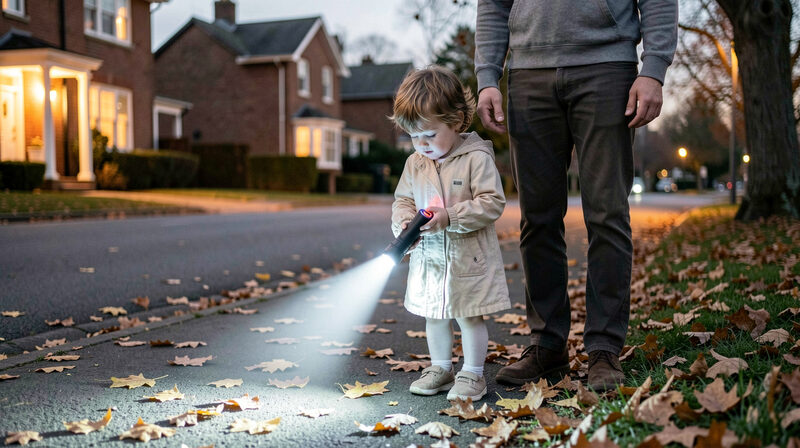
Celebrating and Safety
Trick or Treat Safety
Visibility, routes, costume checks and the sweets rule: a plain plan for the evening, plus the Halloween foods and objects that harm pets.
Visibility, routes, costume checks, the sweets rule and the animals.
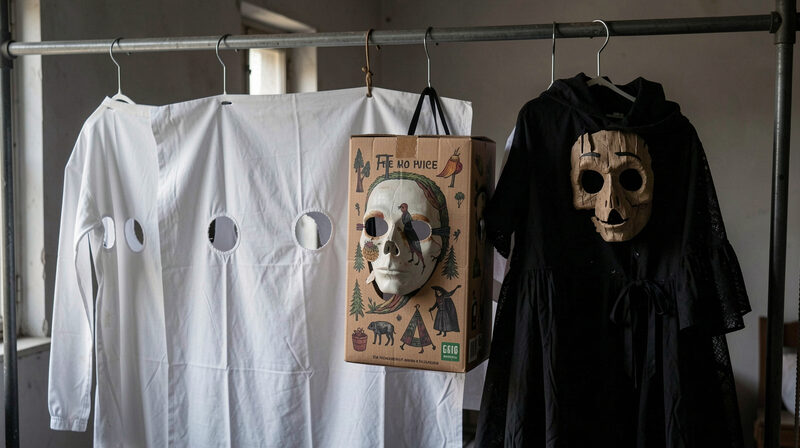
Celebrating and Safety
Halloween Costumes Through the Decades
From homemade sheet ghosts to mass market masks: how Halloween dressing changed decade by decade and what each era still lends us.
The sheet ghost, the boxed mask and the revival of the homemade.